The Magic of Mary’s Gravel Bike Camp
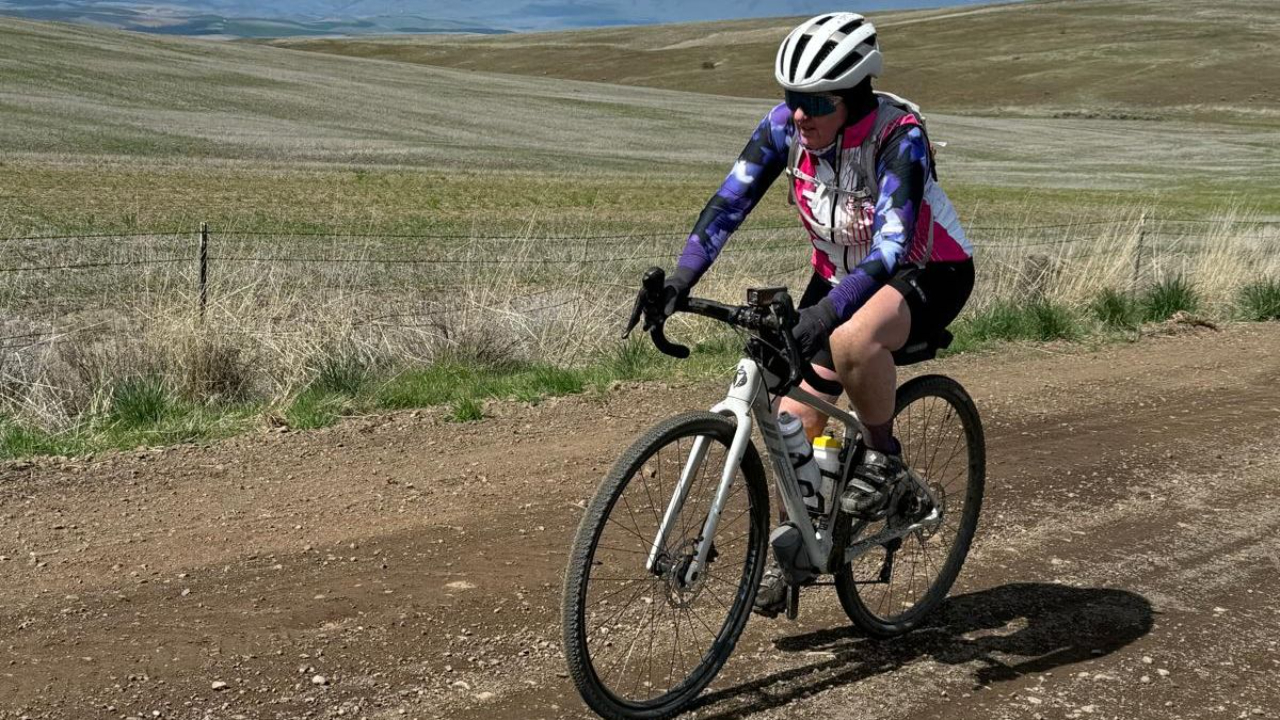
Mary Wiegand has been a road cyclist for years, but when she and her siblings signed up for a 50-mile gravel course in Arkansas a few years ago, the inexperience on new terrain showed. While her siblings celebrated at the finish line, she got lost, struggled on the rougher gravel and climbs, and ended up with a DNF. It was disappointing but also clarifying: She wasn’t enjoying gravel because she wasn’t yet skilled enough to handle it.
Wanting to improve, she started following more gravel content and came across Serena Bishop Gordon, co-founder of Special Blend Gravel. Serena’s reputation, plus her podium finish at the Unbound Gravel XL, caught Mary's attention.
Then came summer 2025 and the JoyRide, a bike-centric weekend where Mary tackled the optional gravel sections and ended up pushing her bike up hills she knew she could ride on pavement. It only reinforced her need for real instruction.
Meeting Serena at JoyRide sealed it. That encounter nudged her from “I should” to “I’m doing this.” She committed to attending gravel camp in spring 2026, determined to build the skills she’d been missing.
Who were the divas that showed up to gravel camp?
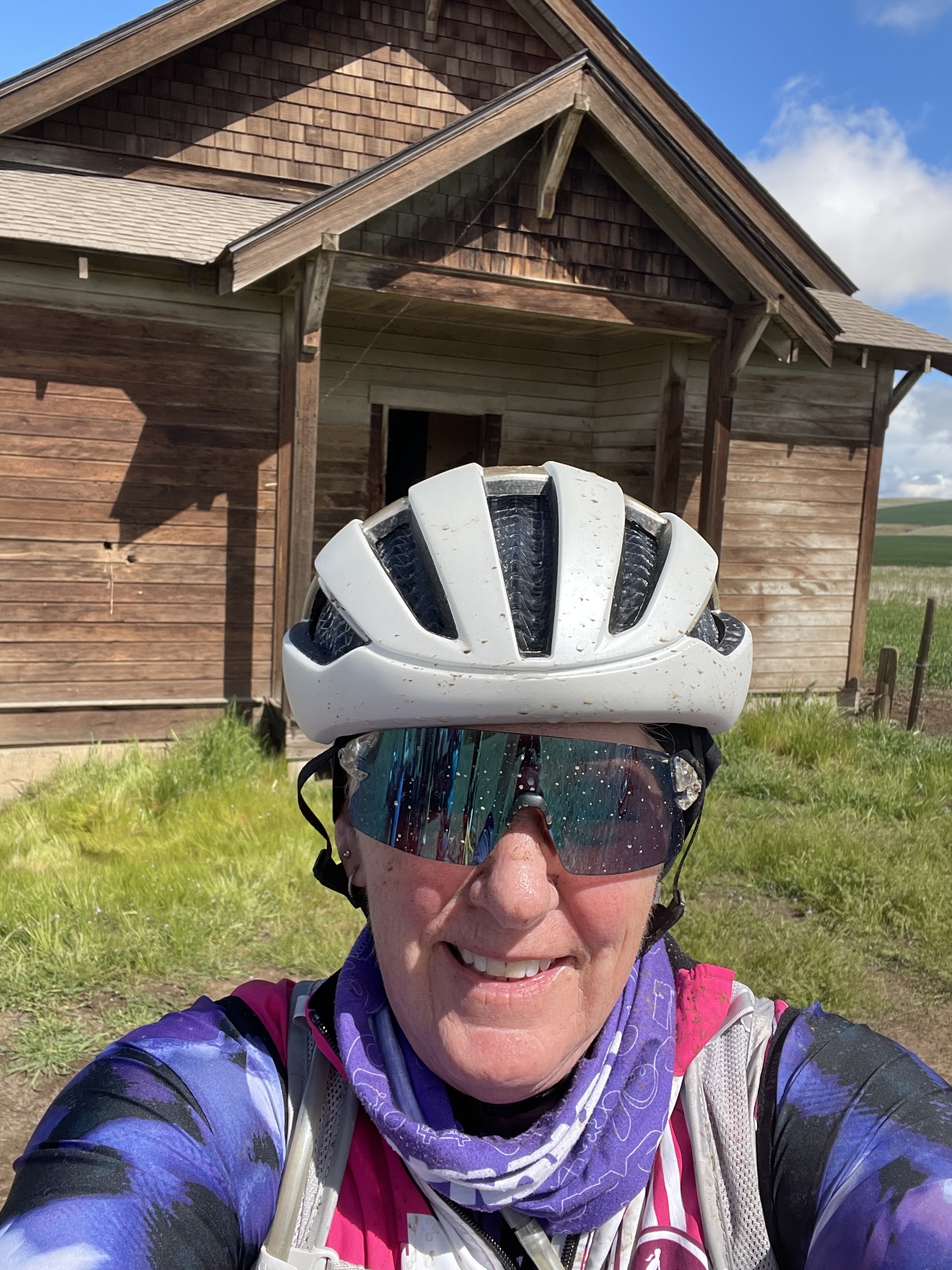
There were about 30 women there, plus nine fantastic women coaches. The age range was wide—mid-twenties up through the 60s—and I’m pretty sure I was the oldest at 66. Most of the women were from the West Coast, but a few came from as far away as Florida and even Guadalajara, Mexico. About half were first-timers and the rest were returning SBG veterans. Our experience levels were all over the map, too, from fairly seasoned racers to people like me who were still pretty green. Some came to gravel from mountain biking, others from the road. The camp materials made it clear you could be new to gravel, but you did need to have some basic bike experience. Thankfully, that box I could check.
What does a gravel camp schedule look like?
Camp started on a Thursday afternoon and ended on Sunday afternoon. Thursday was getting settled, introducing ourselves, and doing some practice riding at a nearby park. We practiced riding two-by-two close together by putting one hand on each other's shoulders as we rode.
Friday was our first big ride and we self-selected into pace/skill groups and I chose the slowest group. We learned more about riding uphill and cornering and control on downhills. The first gravel hill was short and steep, my nemesis, and I had to get off about a third of the way up and walk. I remember thinking, "Is this how this weekend is going to go?"
On Saturday we covered riding with control, how to corner safely, how and when to brake and not brake, where to put our feet when riding downhill, and also how riding in the drops actually gives you more control than riding on the hoods on a downhill.
It rained the first half of Saturday and the word hypothermia crossed my mind more than a few times, but once it stopped raining, the weather was amazing and the trail dried up pretty well.
Sunday was our final ride and we learned about riding over technical terrain. I actually did okay and thought it was kind of fun, but when we got to a steep downhill, I spent about 5 minutes at the top regretting all my life choices. One of the coaches I was riding with came to the top to encourage me, and I finally rode down, dropping f bombs like crazy. The gals at the bottom were cheering for me as I rode and that helped so much.
Your stats for the weekend?
Total mileage: 109 miles
Total elevation gain: 9,329 feet
Was putting yourself out there as scary as the downhills?
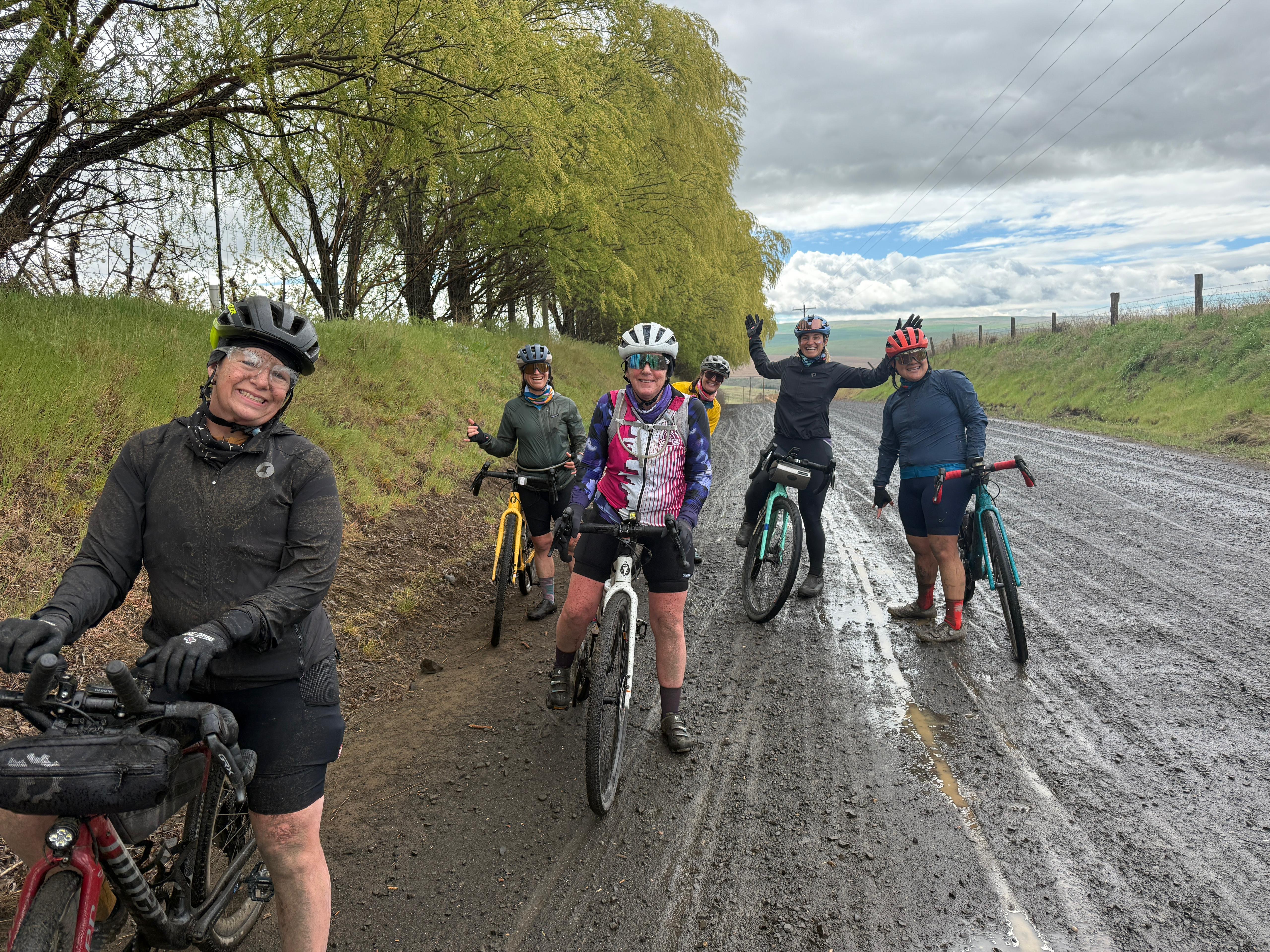
It was honestly pretty scary to put myself out there—socially and athletically. I’ve joined plenty of groups before, and it’s almost always been worth it. I mean, I showed up at the AMR Hilton Head retreat not knowing a single person and ended up with lifelong friends I still see a few times a year. But for some reason, I was extra nervous about this trip.
The coaches were wonderfully welcoming, and all the women were genuinely kind. But since we rode in different pace groups with different athletic goals, it was harder to get to know anyone deeply. Still, I did manage to connect with a couple of people, which felt like a win.
Athletically, I held my own in the right pace group, but it definitely showed me how much room there is to grow.
Camp moments worth replaying:
The woman in charge of the mid-day aid stations was a genius. All the fuel and hydration were labeled with the number of carbs, and there were feminine hygiene products, wipes, and anything one could need.
Other highlights were the coaches and the info sessions held daily after the rides. We learned about nutrition, tires and equipment, bike handling and etiquette, and proper ways to paceline—both single and double file. The coaches rode alongside us, giving us tips, answering questions, learning about us as people, and just being really supportive.
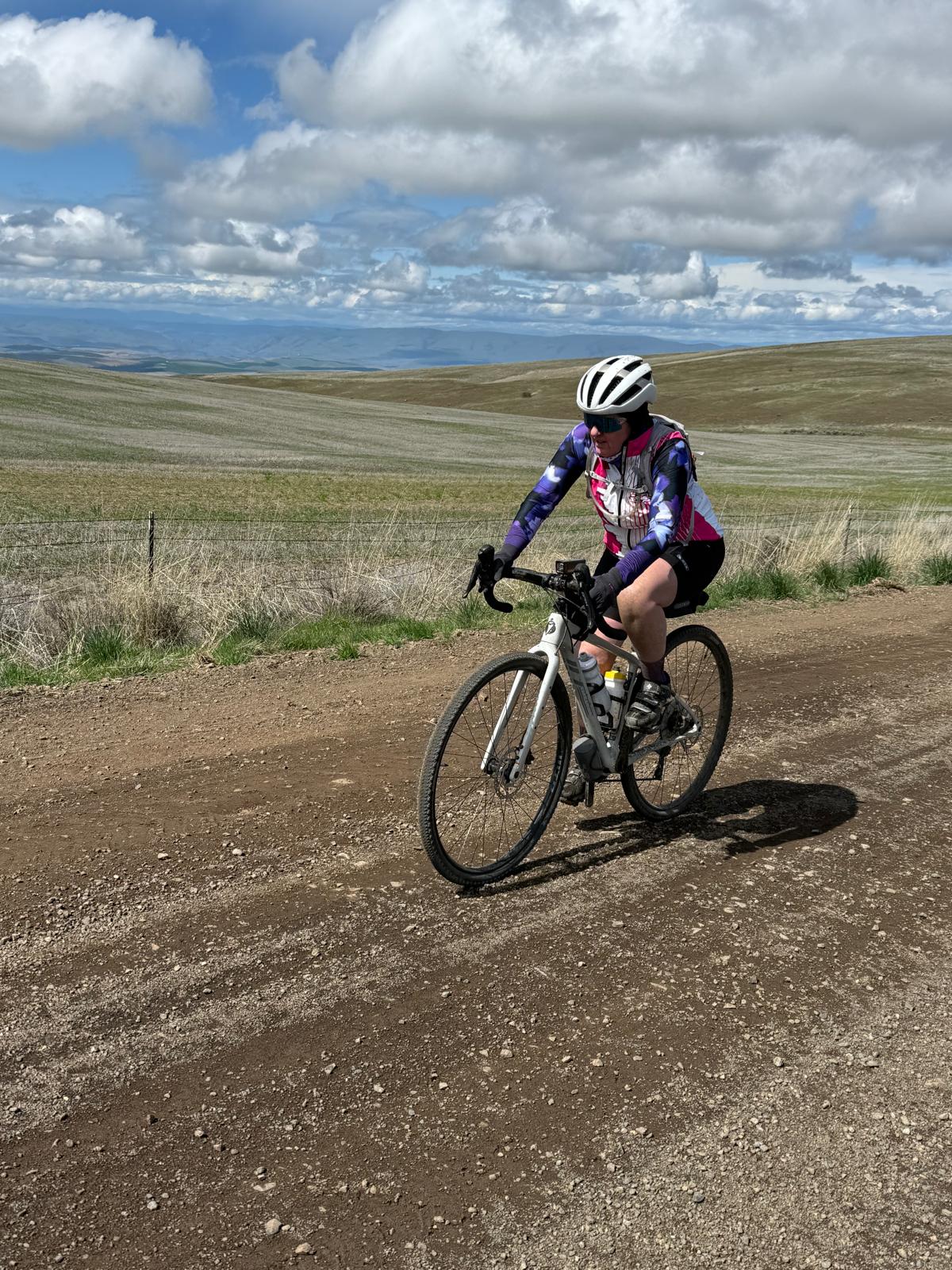
Does the post-camp glow continue?
Since coming home from camp I've been riding on the road, but I am actively practicing downhill cornering skills, riding in the drops, and some riding in a paceline. Gravel skills absolutely translate to road skills.
Advice from the other side of gravel camp:
Go for it! Find a camp that speaks to you as best as you can tell. I spent four months preparing for camp by following a specific training plan with a lot of riding—almost all on my Peloton bike because of the weather. I definitely learned a lot and am looking forward to riding more gravel in the future. Who knows, I may even be a repeat camper, as there is always more to learn.