(Almost) Everest Base Camp: A Story Thin Air and One Very Good Horse
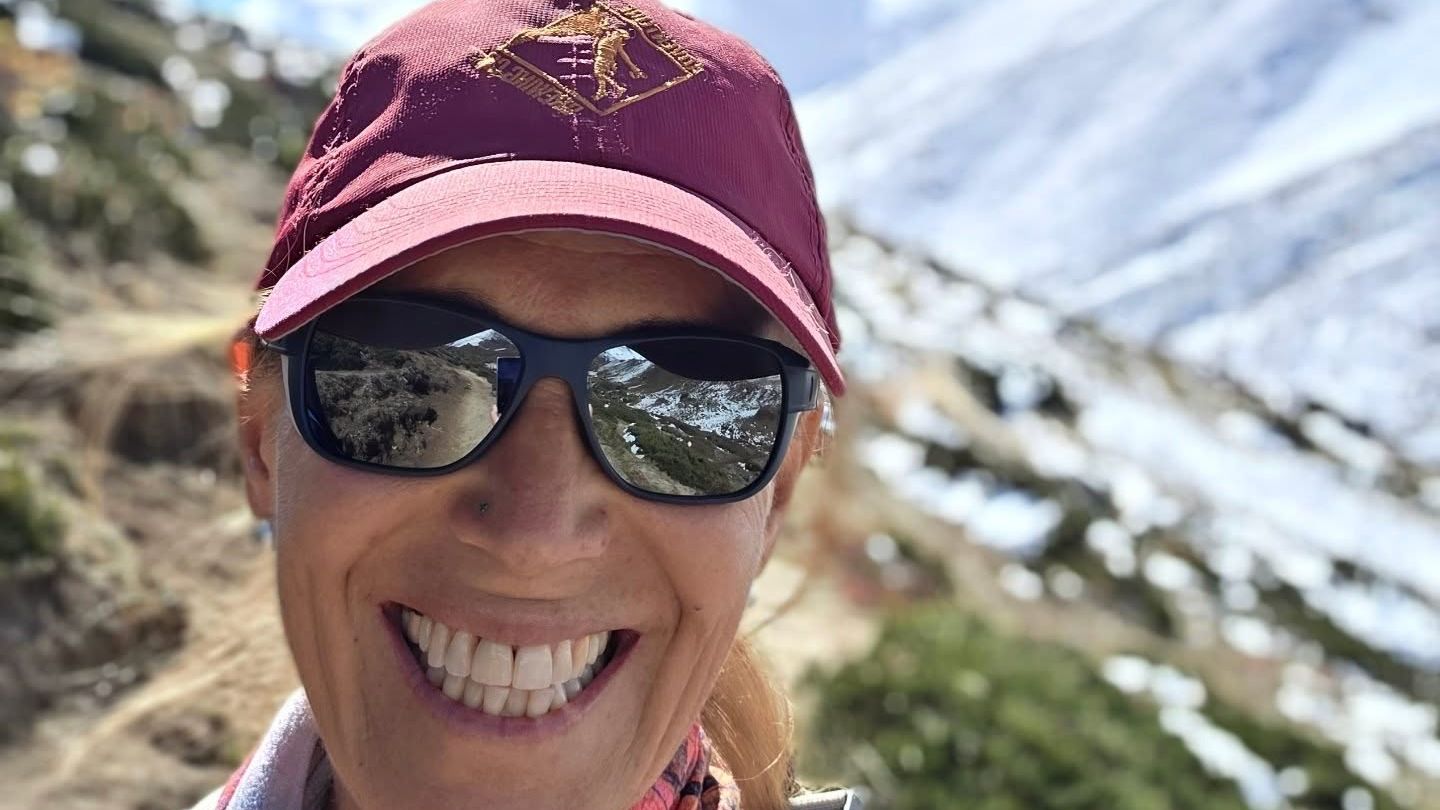
When Anita Uyehara's knees started giving her trouble after a prolific running career, she just found a new way to keep going. The runner-turned-trekker trained for something a little different: A trek to Everest Base Camp (EBC).
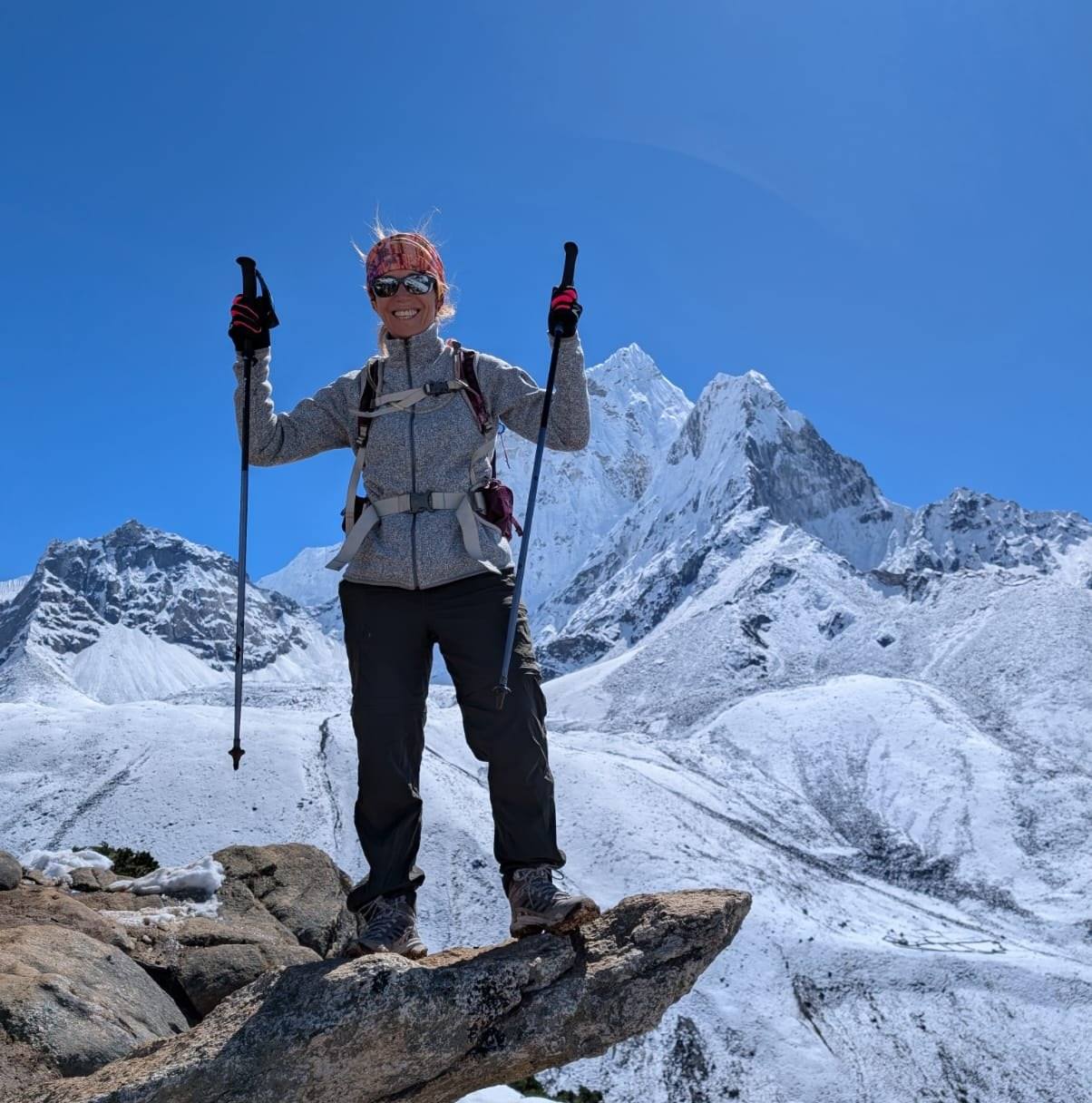
In case you haven't been to Nepal lately, EBC isn't exactly a walk in the park. It's about 11 days of hiking through Nepal's Khumbu Valley, climbing to over 17,000 feet along the way. Anita (her grandkids call her "Nita") trained from home in eastern Virginia, where the land is flat enough that finding real elevation means driving a few hours west. "My home sits at almost sea level," she laughs, "which turns out to matter quite a bit for this story."
She didn't even start running until her 40s, which she'll be first to tell you is late in the game. She'd tag along on her youngest son's track training, and the two of them would race opposite loops around the neighborhood just to see who got back first. "My little 'mom trick' worked. He became determined to beat me every time, and he eventually qualified for the state championships in track. Somewhere along the way, I discovered that I loved running, too."
That one small decision turned into more than 30 marathons and a few ultras over the years, plus a lot of miles with good friends, until she moved from running to long trekking instead. "The adventure didn't end," she says, "it just changed trails." Now, at 63, she's not interested in the idea that getting older means your world has to get smaller.
Let's talk planning. Where do you even start?
For years, I read everything I could about Everest and dreamed of seeing it myself. Mentally, I was all in; the challenge was getting my body and the logistics to match.
So I researched everything: Best trekking companies? How to train at sea level? How much gear to carry? Porter training and compensation? Altitude acclimatization? Medical training for the crew if someone gets sick?
The more I learned, the more I realized reaching Everest Base Camp isn't just about endurance, it's about preparation, patience, and choosing a team that puts safety ahead of summit fever.
I must have listened to Bob Seger's "Kathmandu" a hundred times before the trip. Every time I heard, "I think I'm goin' to Kathmandu... That's really, really where I'm goin' to," the dream felt a little more real. Eventually, it wasn't just a song. It was my boarding pass. After years of dreaming it, I was actually going!
Breaking Down the Journey: Days, Gear, and Guides
- Nearly 30 hours of flying from Washington DC to Kathmandu;
- 4 unexpected days waiting in Kathmandu and the lowlands for storms to clear
before she could fly into Lukla; - A strict 15 kg (33 lb.) total gear limit—everything she needed for 2 weeks trekking.
"Two pairs of underwear and two pairs of socks were just going to have to do!" - 6 trekkers, 1 Sherpa guide, 2 assistant guides, and 3 extraordinary porters;
- 7 days of trekking: "It was supposed to be 11 before—spoiler alert—my medical evacuation."
- 9,383 feet at the trek’s start in Lukla; 17,598 feet at Everest Base Camp; 16,237 feet at Lobuche, where Anita's trek ended.
- 1,361 vertical feet and 1 morning of hiking was all that remained between Anita and Everest Base Camp. "That’s all I had left to do!"
To EBC (Almost)
After nearly 30 hours of travel, I landed in Kathmandu and met my trekking group: five men from the U.K. and a terrific nurse who quickly became my trail buddy. Within days, we'd become a trekking family, sharing tents, meals, and anticipation of what lay ahead.
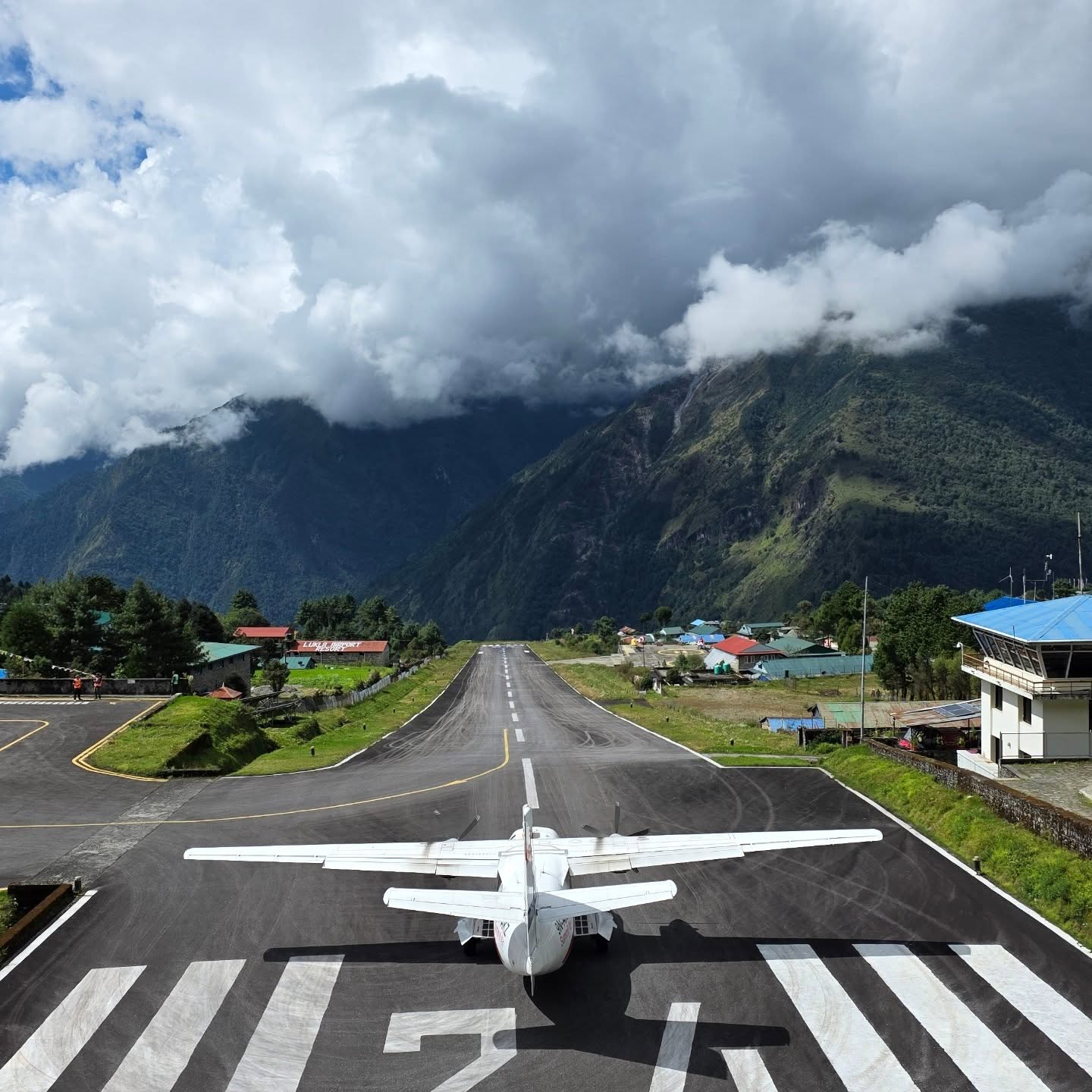
The journey to Everest Base Camp starts with a prop plane ride into Lukla, a small Sherpa town whose airport is often called one of the most dangerous in the world.
But first, Mother Nature intervened: Storms had flooded villages and washed out roads across Nepal, grounding flights for days. We waited, watched the weather, and finally boarded for one of the most exhilarating flights of my life.
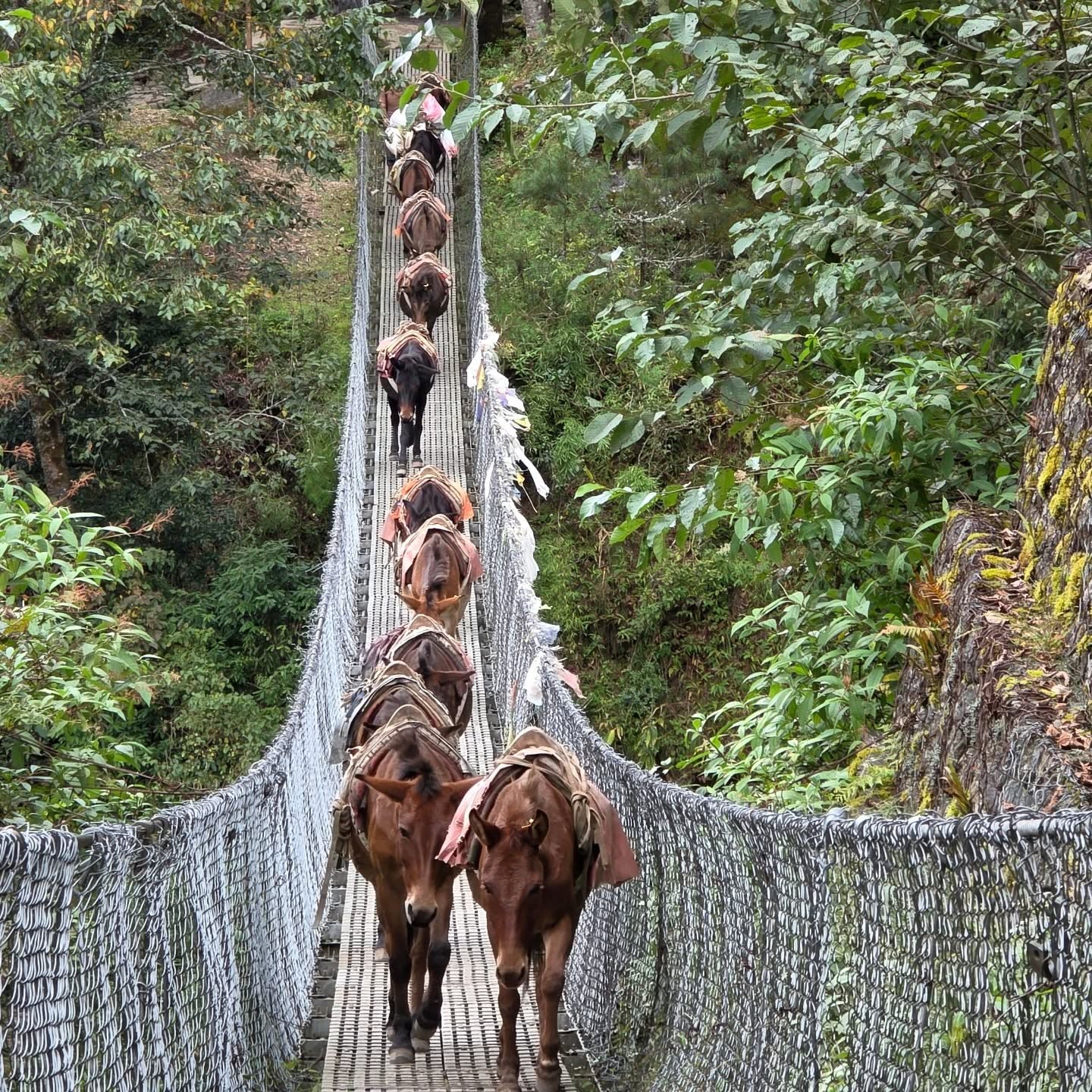
Then the real adventure began. Day one started at 9,383 feet, six rainy miles through rocky trail and lush forest, and I loved every minute. Day two brought us to Namche Bazaar (11,286 feet), crossing suspension bridges strung with prayer flags and dodging pack animals.
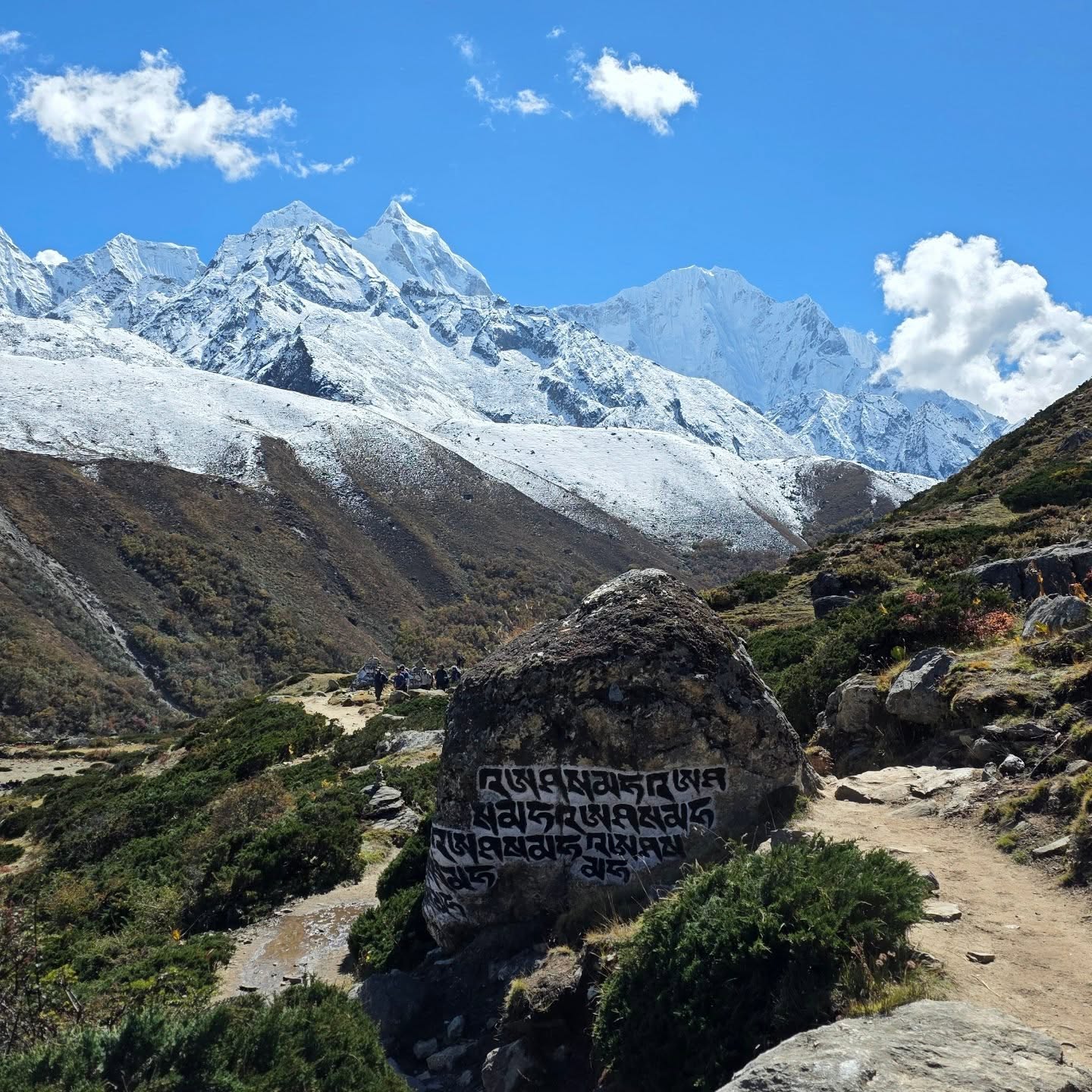
Days three through five were magical. Blue skies, sweeping vistas, villages that seemed suspended between earth and sky, and monastery gongs lifting our spirits. It was also tough. Weather delays had cost us two days of acclimatization. We missed some of the "hike high, sleep low" days that help your body adjust, and I still wish we'd had them back.
Each day fell into a rhythm: filter 3-4 liters of water, wash in cold water (squat toilet included; showers were nonexistent), porridge and tea by 7am, teahouse by 4pm—heated only by dried yak dung, cots just wooden platforms—rice and lentils for dinner, and into worn sleeping bags by 8, my heart pounding at 88 bpm. Sleep was hard to come by. Headaches and stomach issues were constant, oxygen saturation hovered around 80, and even walking across a room left me winded. Through it all, the porters and guides were endlessly patient and kind.
The Himalayas are stunning beyond words. They're also utterly indifferent to your plans. I'd learn that lesson at 16,237 feet.
What did your training look like?
I had done other high-altitude treks (Kilimanjaro, Annapurna Circuit, Mt Blank circuit) within the last six years. Was I over confident? Perhaps. But this was my #1 trekking goal, so I did train.
Six months of 4-5 days a week; my Training Peaks calendar looked like a patchwork of
strength, cardio, running, hiking. I invested in a Oxygen mask and ran the neighborhood looking like—and sounding—like Darth Vader.
Over the months, I built up to 2-3 days of back-to-back 10-16 mile hikes with weight. I hiked part of the Appalachian Trail. I hiked the Shenandoah. But those mountains are 3,000, maybe 4,000 feet high. That was my biggest downfall. My back and legs were trained up, but my lungs? Not so much.
What part of the trip required you to dig deep?
The moment that required me to dig deep wasn't a steep climb, it was accepting that the mountain had a different plan for me that day.
On our final day before we were supposed to reach EBC, I arrived at the teahouse in Lobuche (16,260 ft) exhausted and dizzy, and collapsed onto my sleeping bag instead of my usual routine. I woke for dinner, and my guides immediately noticed the change. My oxygen saturation was 56%.
Within minutes, I was helped onto a horse, one hand tied to the saddle in case I lost consciousness. For two hours starting around 6:30 pm, we descended over 1,500 vertical feet to a clinic with oxygen in Pangboche. The air was bitterly cold; the night sky was breathtaking, a million stars between the peaks. I'll never forget it, and I cannot imagine where I'd be without those two men and that horse.
The volunteer doctor at the Himalayan Rescue Association aid post diagnosed me with HAPE—high-altitude pulmonary edema—and attended to me all night. The clinic had no heat, no sink, just one outlet per room. Humble doesn't begin to describe it, but it saves lives. Mine included.
The next morning I flew back to Kathmandu by helicopter, then by ambulance to the hospital. Twenty-four hours of hydration and oxygen later, my levels were normal and I was discharged. Physically, I was fine, but I was heartbroken. I'd come within one morning and 1,361 vertical feet of Everest Base Camp.
Still, I left Nepal in awe of its mountains and its people, who showed me extraordinary kindness and compassion, owing me nothing. The mountains will still call me. They just had other plans for me that day last October.
Biggest surprise?
After I left the hospital, I spent a few days in Kathmandu wondering why this happened. I was sad, and then so very grateful for the kindness of strangers.
I will remember the mountains, yes. But it is the people that will remain in my heart and, like the stars on my night on horseback, will remain the light of this trip. I’m disappointed that I couldn't achieve this dream. But maybe I did, and it was just a different dream?
Advice for others with wanderlust considering a trip like this?
Do it. Don’t let age or zip code or any doubt stop you. Prepare well, respect the mountains, and just go!
But before you do, train. Learn to love doing the stair climber with weight. Build up to several weeks with back-to-back hiking with a weighted pack (your back will thank you). Go climb a 14’er or two. They won’t prepare you for the Himalayas but they’ll introduce you to hiking at altitude and they’ll boost your confidence!