Coach Alison Unlocks Triathlon
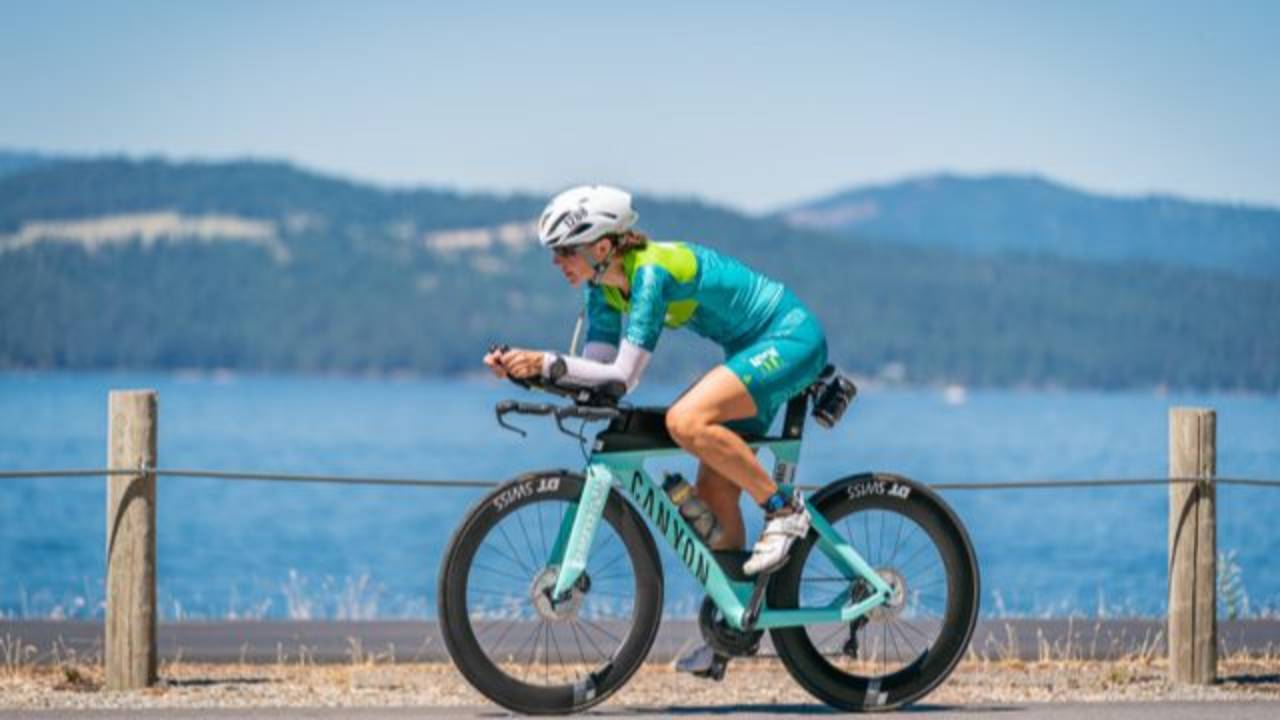
Alison Freeman loves tough triathlons. As an athlete, she thrived on the relentless hills at Ironman 70.3 St. George and the relentless heat at Ironman Coeur d’Alene. "It was 105 degrees both years I did it," she admits, "The race didn't really love me back."
More than that, though, Alison loves to coach athletes, and especially beginners, all types of triathlons. "I can talk triathlon all day long," the mom of three adult children says, "I love to connect with my athletes regularly and talk through their workouts, their technique, and answer any questions they have."
She's not kidding: last year, Alison became one of a handful of Level III USA Triathlon certified coaches, and also was named the 2026 USA Triathlon Coach Educator of the Year.
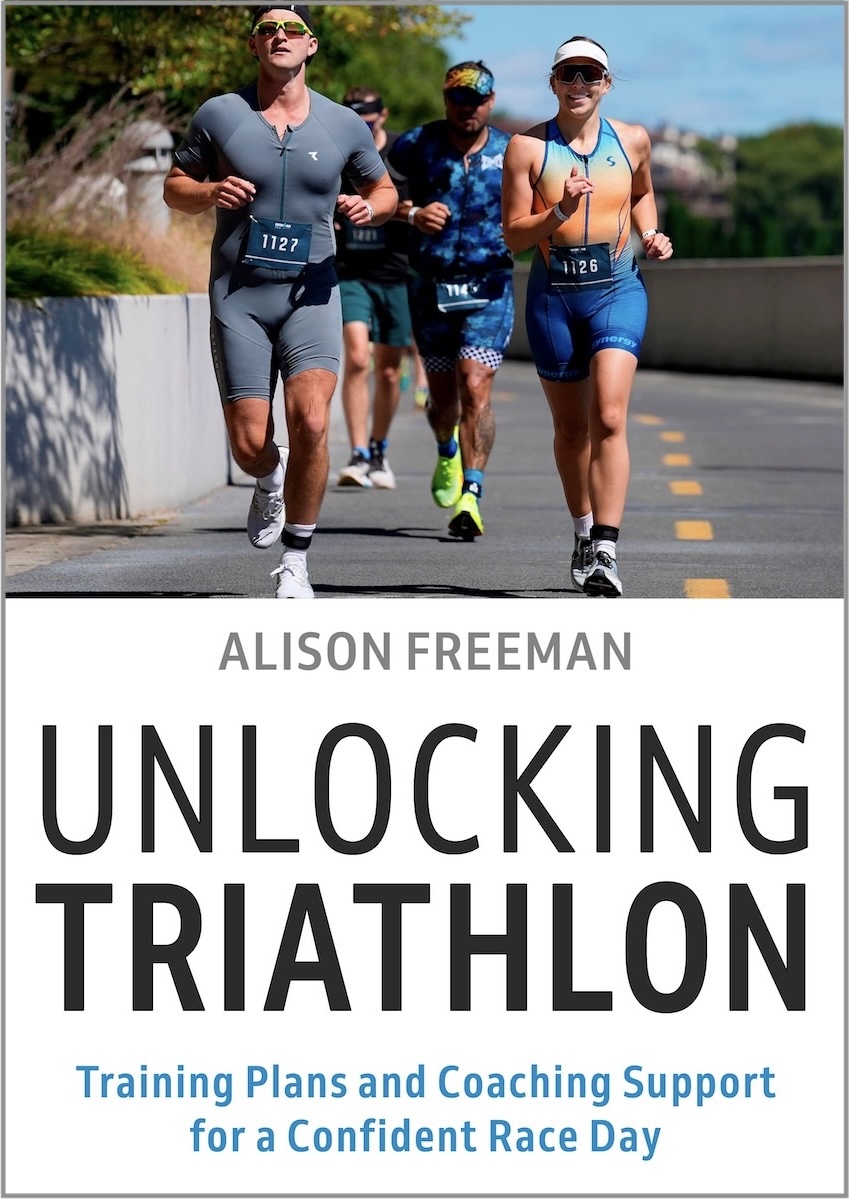 Unlock Triathlon at Bookshop, Barnes and Noble, or Amazon.
Now, you don't have to be a coached athlete of Alison's to tap into her wisdom: her first book, Unlocking Triathlon: Training Plans and Coaching Support for a Confident Race Day was recently released by Human Kinetics.
Here's a look into Alison and her new book:
Green hair all summer long: I played soccer in elementary school, like everyone did, and started swimming when I was 7 years old. I was on my neighborhood swim team every summer until I was 18 and also swam in high school. My claim to fame? I was the 6th fastest 12-and-under 25-yard butterflier. In other words, I showed up, but I was far from Katy Ledecky.
In college I played club rugby, and that prompted me to start running. It was horrible at first but I obviously came to love it. I ran the New York Marathon when I was 23 (back when you could actually get in) and the San Francisco Marathon a few years after that.
Giving it a tri: After spending several years in baby boot camp—I had three kids in four years—I really needed something that was just for me. I didn’t want to run another marathon, but I wanted something like that. I had a swimming background, and had taken spin classes for years, so I figured: why not triathlon?
Nobody can ask what's for dinner when you're swimming: Triathlon turned out to be everything. After years of watching my babies turn into toddlers and children while everything I did was doomed to be repeated within 2 to 72 hours, I was finally moving forward and hitting milestones of my own. Triathlon created structure for my days, weeks, and months, and an ebb and flow for my years.
Athlete Alison becomes Coach Alison: I became a triathlon coach because I really liked the idea of getting to talk triathlon all day. Not kidding. I also loved the structure of writing training plans. At the time, I didn’t realize how much of coaching exists outside of the training plans, I’ve found that most of what I love about coaching lives there.
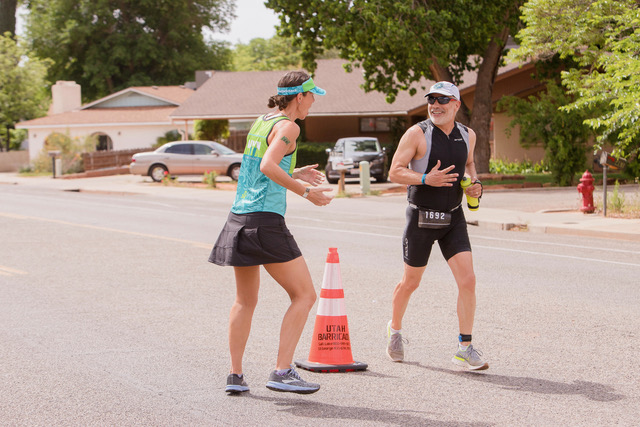
Coach Alison exactly where she loves to be.
Is this thing on?: During my first year of coaching, I distinctly remember the day one athlete was doing his first Ironman. He was maybe halfway through the run course, and had slowed down (as people do) but to a point that I was getting concerned about the cut-off.
I started talking to him in my head, nudging him to pick up his pace and making sure he understood the necessity of that. And lo and behold, when he hit the next timing mat, his pace had increased! It was like he could hear me, and it was incredible. He finished with plenty of time to spare, became an Ironman—and I am still coaching him over a decade later!
How I help you unlock triathlon: My new book (find it on Bookshop, Barnes and Noble, or Amazon) provides information and guidance. Information on swim-bike-run skills and how fitness is developed and how you structure training.
But also all the guidance that you’d get as a coached athlete: how to think about those first weeks of training and how to evolve your engagement with workouts as you get further into your plan and how to prepare for and think about race day. In other words, not just how to set up your season on paper, but how to move through those weeks in practice.
In addition, instead of providing training plans that are uniformly beginner or intermediate across all three sports, the Unlocking Triathlon plans allow you to tailor the plans to your specific background and experience in each sport. You can pick Level 1, 2, or 3 for each sport within a plan. You can be a Level 1 (brand new) swimmer, a Level 3 (very experienced) cyclist, and a Level 2 (relatively newer) runner and get a training plan made just for you.
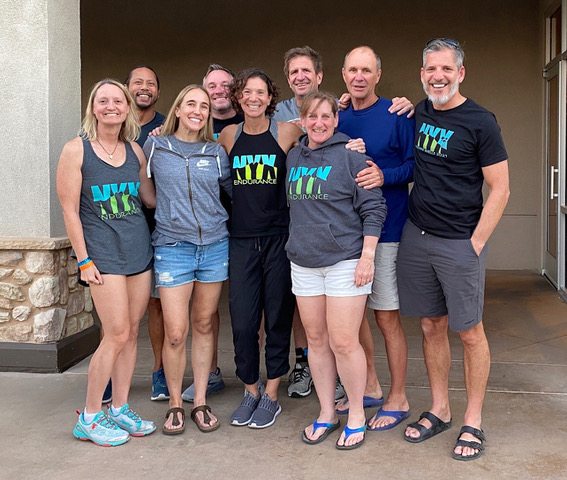
Coach Alison and her lucky athletes.
New-ish to swimming? Think about moving water with your arms, instead of moving your arms through the water. You create propulsion during your pull by pushing on the water, all the way from your fingertips to your elbows. Improve your feel for that pressure on the water, and you’ll improve your swim.
Splish but don't splash: Also, don’t kick (much). Kicking produces propulsion, but at a very high energy cost. Kick lightly.
Ride by effort, not terrain: On the bike, use your gears to flatten out the road and ride at a consistent effort level, regardless of the terrain. That's a better strategy than powering up a hill, needing to recover on the way down, and unwittingly turning every ride into an interval session.
Race day prep is important for any race—a 10k or half-marathon, a gravel bike event, or a triathlon—because figuring-it-out-as-you-go is rarely a recipe for success.
Assignments during taper: Deciding on your pacing or effort level when you’re rested, excited and full of adrenaline often leads to sub-optimal performance (read: notable fade at the end). What's more, winging your fueling and hydration generally means you’ll be underfueled and dehydrated.
It's way better to determine your effort levels and paces pre-race, when you can be unbiased and disciplined. Better to think through your fueling and hydration plan when your brain can handle the math of how many bottles and gels you’ll need for your total time on course.
Plus while you’re at it, you can write down what to eat for dinner the night before and when to set your alarm race morning and when to leave for the race. That way you’ll take all the decisions out of race weekend. As a bonus you’ll calm your nerves, because you’ll have thought through every detail and will know what to anticipate and how you want race day to unfold.
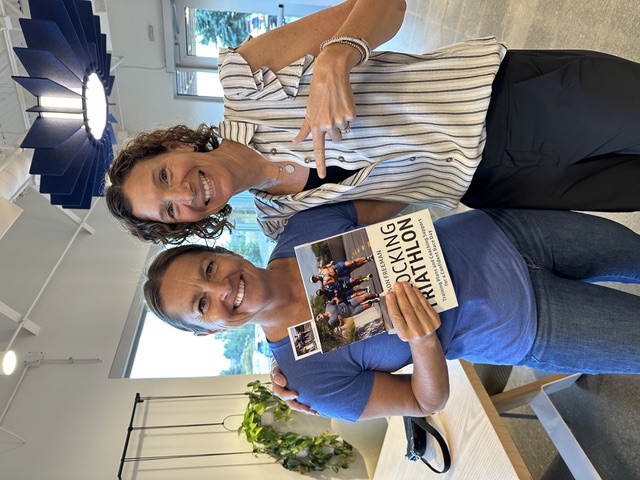
Tri-curious?: If you're willing to show up and do the work, you do it. That is truly the only thing that separates people who do triathlon and people who don’t.